
Scroll

Featured
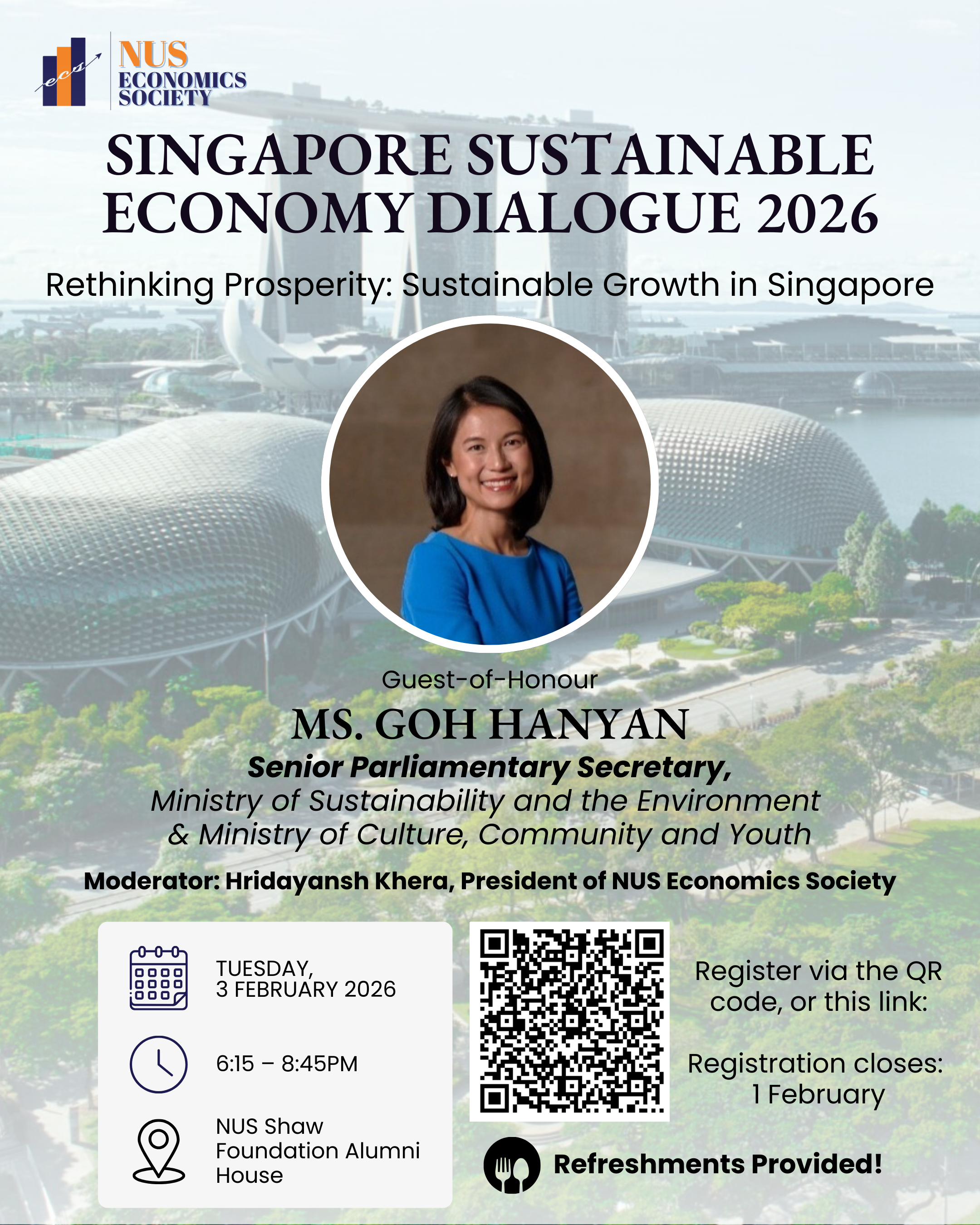
Singapore Sustainability Dialogue 2026




WORKSHOPS


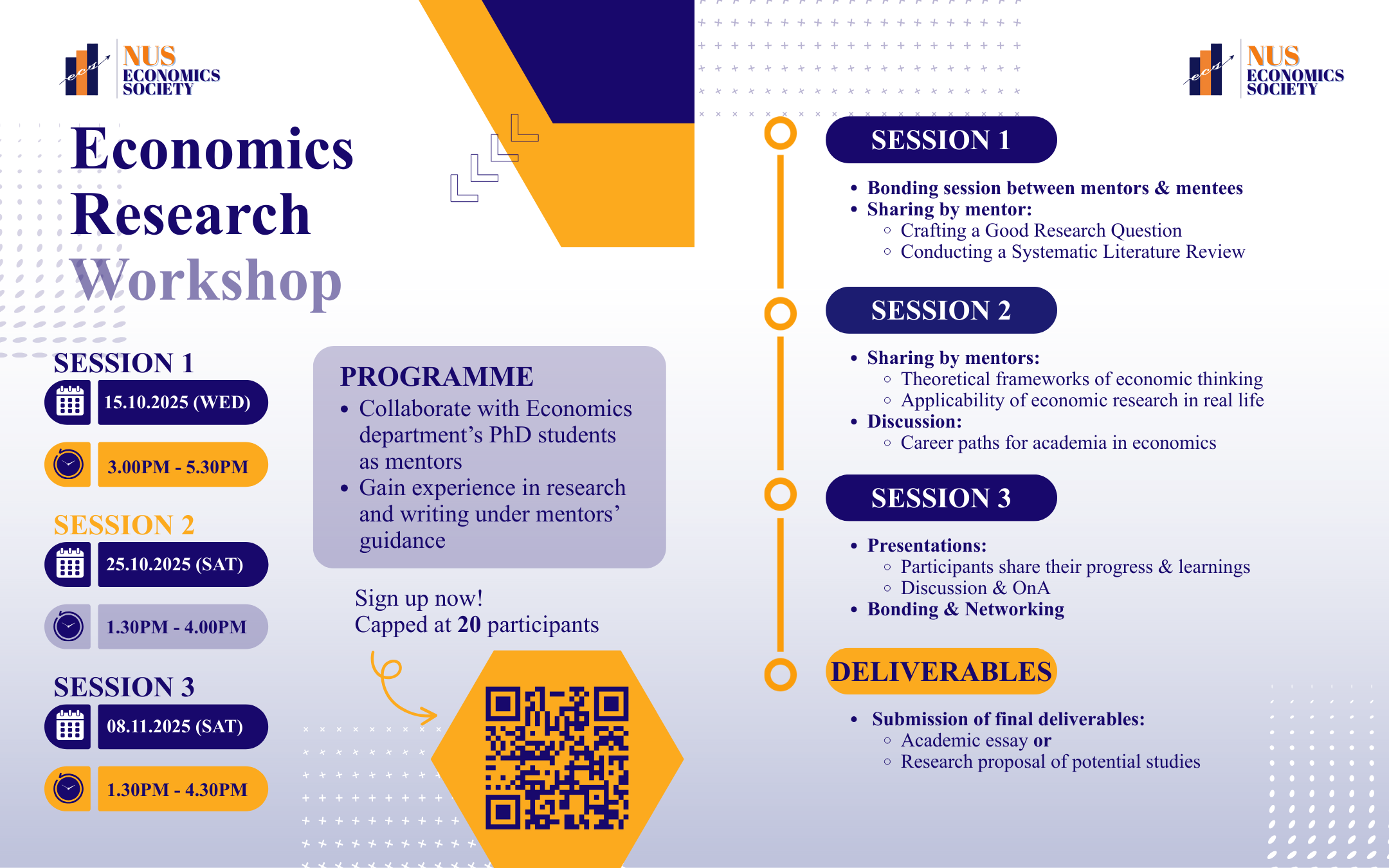
Economics Research workshop
A series of professors-guided economics research workshops for students to gain research experience by exploring a topic of interest and producing a concise research paper. The workshops build students’ analytical and writing skills, providing a strong foundation for students’ Honours thesis and academic portfolio
🚀 Thinking about an honours thesis? Curious about academia?
Join our NUS Economics Research Workshop Series — a 3-part journey designed to introduce undergraduates to the world of academic research and writing.
👩🎓 What’s in it for you?
🔹Learn the basics of economic research & academic writing
🔹Work closely with PhD mentors in a collaborative environment
🔹Produce a research essay or proposal by the end of the series
EVENTS & INITIATIVES
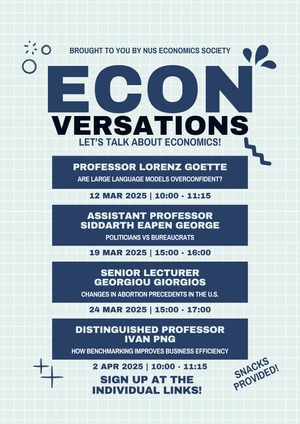
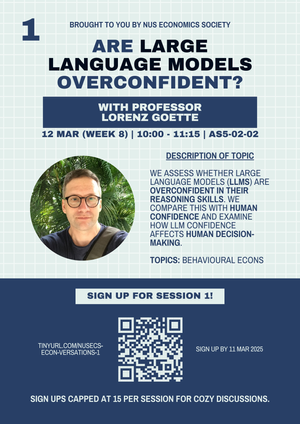
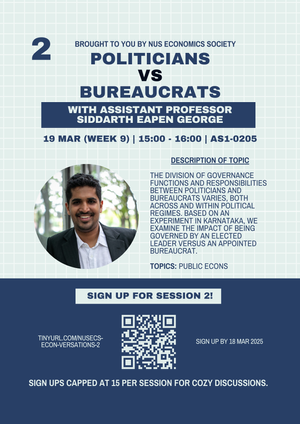
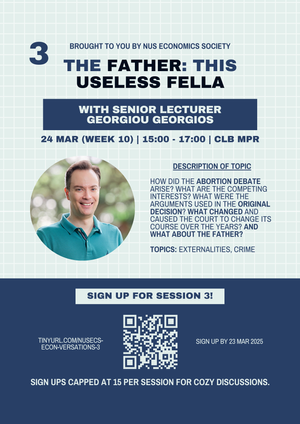
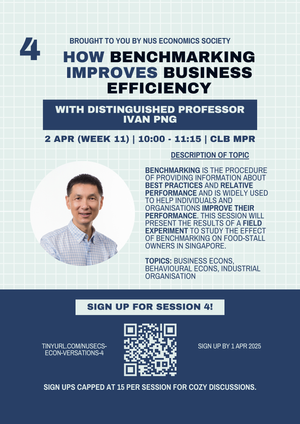
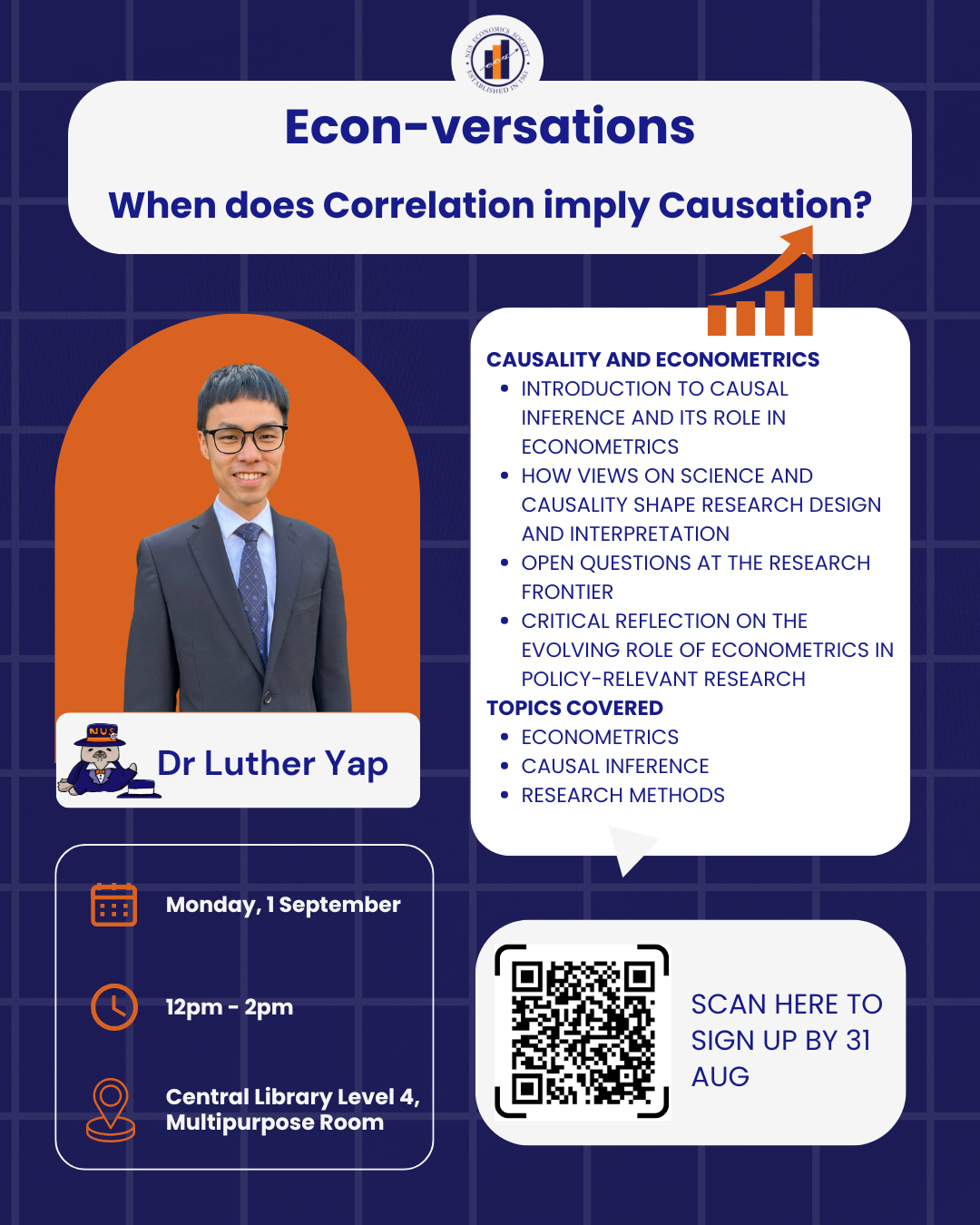
Econversations
A series of weekly discussions with professors on niche economic topics!
Econversations
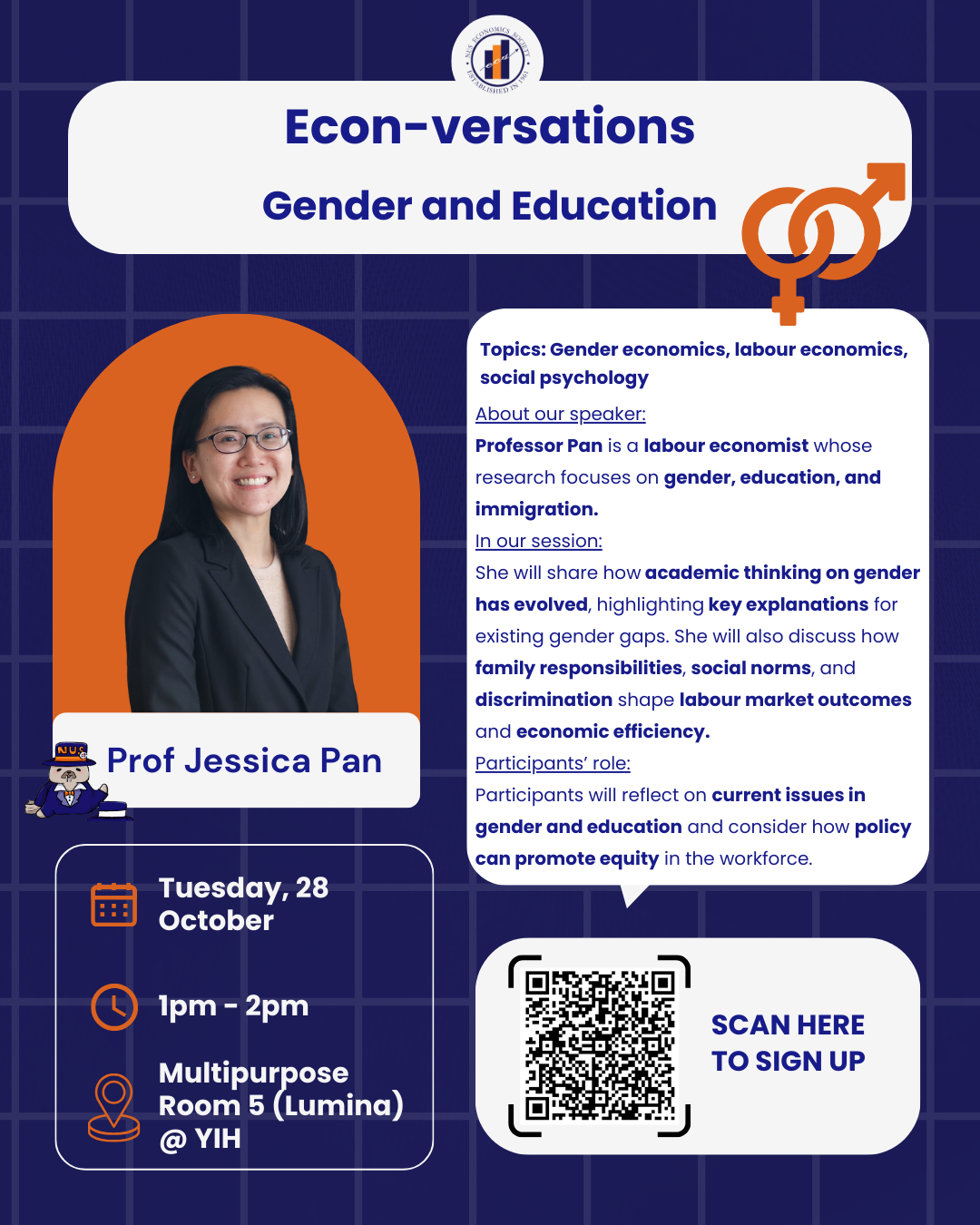
We often start with the real world: why do opportunities and outcomes differ across people? In our session on gender economics, Professor Pan will unpack how gender, education, and immigration shape labour market experiences. Then we’ll shift to the toolkit behind the evidence—join Dr Luther Yap for a deep dive into econometrics, causal inference, and research methods, and learn how economists turn questions into credible answers.
PUBLICATIONS
Market Matters (MM)


In Q3 2024, the Malaysian ringgit (MYR) experienced significant appreciation, driven by a weaker US dollar, supportive domestic policies, and substantial foreign capital inflows. While this surge strengthens Malaysia's economy, concerns remain regarding the long-term sustainability of the MYR's value, particularly with potential challenges to export competitiveness and external economic factors.

Nigeria’s bold economic reforms, including the 2023 forex unification and removal of petrol subsidies, mark a decisive shift from decades of currency mismanagement and oil dependence. While these policies aim to eliminate arbitrage and fiscal deficits, they have also triggered soaring inflation and economic hardship. To sustain progress for Africa's reform wave, lets see what Nigeria should do.


While mega-sporting events bring short-term boosts in tourism, jobs, and global visibility, their long-term economic and social costs often outweigh these benefits. Countries face financial burdens, underused infrastructure, and social displacements. Nations must critically assess whether the temporary prestige justifies the lasting consequences

China’s economy faces a property crisis and low consumer confidence, but recent stimulus measures offer hope. Focusing on technology and domestic consumption is key to stable growth.

Australia had recently introduced caps on the number of international students to address the overwhelming influex of immigrants. This however has profound impacts on the local economy.

This article delves into the behavioural economics driving the success of the blind box economy, with a focus on how uncertainty influences consumer behaviour. It examines the role of psychological biases, such as prospect theory and the endowment effect, in spurring spending on such products.


What In The Economics (WITE)

In 2020, Amsterdam became the first city to adopt Doughnut Economics as a framework for urban governance. This paper evaluates the Amsterdam City Doughnut (ACD) through Norton’s principles of Adaptive Management: place-orientation, experimentation and multi-scalar modelling. Using policy documents and academic literature, it finds that while the ACD aligns ethically with place-based governance and spatial multi-level thinking, its application is constrained by socio-economic inequalities, limited learning from experimentation and weak attention to long-term temporal scales.
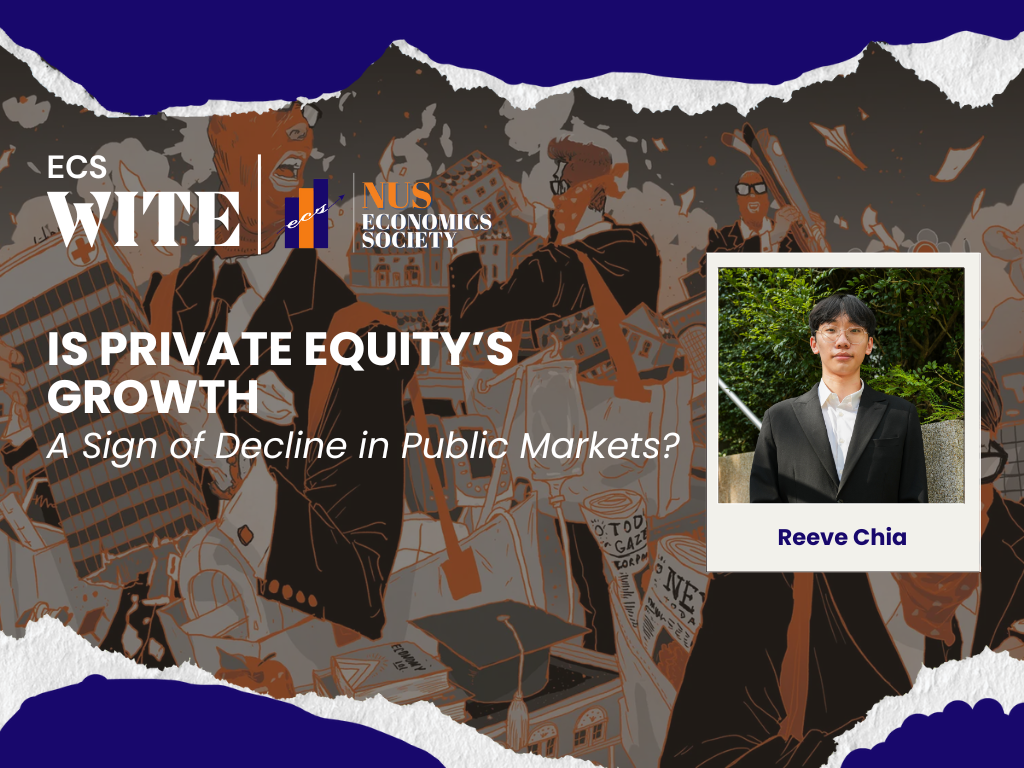
This essay examines the shifting landscape of global finance, specifically investigating whether the unprecedented growth of Private Equity signifies a structural decline in the public markets, highlighted by a significant reduction in listed firms and an 89.4% decline in US IPOs from their 1996 peak. Driven by the expansion of Private Equity, this shift is fuelled by institutional investors seeking higher risk-adjusted returns and companies opting for the regulatory flexibility of private ownership.
This paper provides more externally valid empirical evidence for the effect of presidential term length towards macroeconomic outcome. Accounting for country-year fixed effects and controls, we found that the association between term length and long run growth is positive in non-OECD economies but negative in OECD economies. The association with investment rate is positive in OECD but negative in non-OECD. We found no link with short-run growth and inflation. Additionally, unlimited term is associated with weaker long run growth.
This paper examines whether Bitcoin can legitimately serve as a corporate reserve asset, evaluating its viability through established economic theories.
The analysis reaches a balanced conclusion: Bitcoin is not a substitute for operational liquidity due to its volatility, which undermines precautionary and transactional motives. However, when financed externally via hybrid instruments (e.g., convertibles or preferreds) that lower the cost of capital and segregated as a strategic sleeve, targeted allocations can enhance treasury efficiency, particularly for firms with perpetual horizons, robust capital access, earnings volatility tolerance, and strong governance.

This paper explores how game theory can illuminate the challenges central banks face in counter-cyclical policy amidst global interconnectedness. In our analysis of the impact of foreign monetary actions on domestic inflation and economic growth, we account for strategic interactions between countries by constructing a simultaneous-move Nash game between two central banks, embedding an open-economy IS curve and a Phillips curve. We demonstrate the importance of accurate estimates of foreign spillover effects, and how it makes or breaks central bank policy effectiveness in a globalized economy.
This paper analyses how the revival of industrial policy in the United States and European Union, together with growing financial fragmentation, is reshaping global trade, capital flows, and financial stability. It argues that these shifts reflect a structural move away from efficiency- driven globalisation toward resilience-focused economic governance. While such policies may strengthen domestic production capacity and strategic autonomy, they also distort investment incentives, deepen fiscal asymmetries, and fragment global value chains. The paper concludes that without coordinated multilateral frameworks, these trends risk undermining long-term global efficiency, productivity growth, and financial stability.
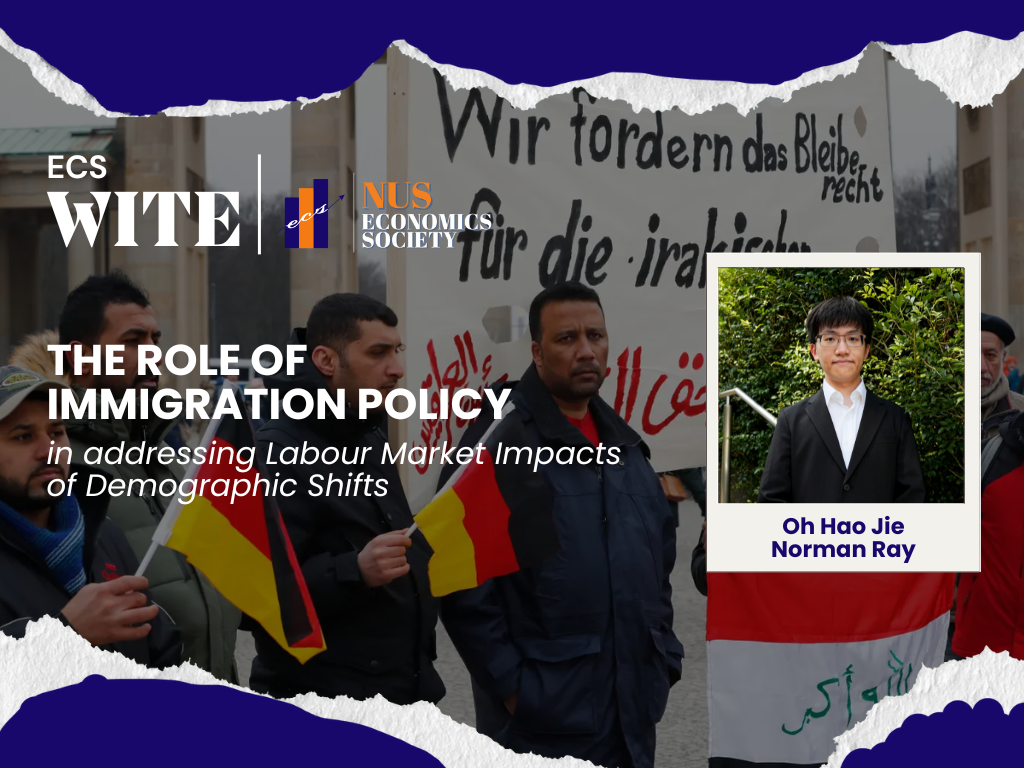
This paper investigates how immigration policies in Germany and Japan tackle labour market challenges arising from ageing populations and declining fertility rates. The comparative study demonstrates that immigration’s ability to mitigate labour shortages in such economies is constrained by inflow volume, skill selectivity and post-arrival labour market institutions that govern job matching and mobility. It further highlights how low retention rates and public sentiment create additional barriers to relief.
When central banks around the world raise interest rates, banks are supposed to follow suit by raising their lending rates and tightening credit conditions. However, what happens when banks operate in completely different competitive environments? This fundamental question lies at the heart of monetary policy effectiveness and remains one that is surprisingly underexplored in emerging markets, where banking structures vary dramatically. This paper seeks to compare three of the most emerging markets in Southeast Asia – Indonesia, Thailand and Vietnam.

Scarcity pricing in luxury markets is often described as “exclusivity signaling,” yet few analyses explain why such signals remain credible across time. This paper reframes Hermes’ scarcity strategy as an endogenous equilibrium outcome of an infinitely repeated game between the firm, consumers, and imitators. Rather than assuming scarcity as an exogenous brand policy, we derive the conditions under which Hermes’ incentive compatibility constraint is self-enforcing. The model integrates imitation spillovers and negative network externalities to show that sustained exclusivity emerges only when the discounted future value of prestige exceeds short-run profits from market flooding. Scarcity, therefore, is not merely chosen. Rather, it is strategicallysustained.
Inflation control is often framed as a technical achievement secured through credible institutions and policy rules. Yet, inflation often re-emerges not after institutional breakdown or high inflation, but after prolonged periods of low inflation and policy credibility. This paper argues that such stability is best understood as a coordination equilibrium sustained by collective memory. When inflation remains absent long enough, that memory can erode, leaving expectations vulnerable to miscoordination. Inflation may then re-emerge even without fundamental macroeconomic deterioration, challenging the conventional intuition of ceteris paribus and highlighting the central role of evolving collective beliefs in inflation dynamics.

Microtransactions now underpin modern gaming, driven not by necessity but by biases. This article applies a behavioural economics lens – risk aversion, present bias and fear of missing out (FOMO) – to explain why players overspend and how developers exploit these biases through design. Using the quasi-hyperbolic (β–δ) model, it connects cognitive tendencies to monetisation strategies, exploring implications for consumer welfare, ethical design and policy interventions.

This paper examines Singapore’s shift from the Selective En-bloc Redevelopment Scheme (SERS) to the Voluntary Early Redevelopment Scheme (VERS) as a response to housing lease decay. It analyses their economic rationale, fiscal sustainability, and social implications, highlighting how this transition marks a paradigm shift from state-led asset enhancement to shared responsibility in managing housing value decay amid land scarcity, intergenerational equity, and fiscal constraints.

While social media has lapped up “new” recession indicators such as the rise of Labubus and the increase in sale for lipsticks, are these really true? This essay aims to discuss the validity of such recession indicators and the role of traditional, tried and tested indicators that economists rely on to identify a recession. It also explores why anecdotal recession indicators tend to be more popular in society.

This essay examines why users often struggle to form meaningful connections on dating platforms such as Hinge. It argues that user dissatisfaction stems from two main sources: algorithmic distortions within the platform’s design and behavioural biases that shape decision-making. Drawing on matching theory, particularly the Gale-Shapley algorithm, and insights from behavioural economics, this essay explores how dating app structures and user psychology jointly undermine stable matches.
This essay evaluates whether Argentina’s latest International Monetary Fund (IMF) programme meaningfully alters the country’s long-standing cycle of sovereign distress and repeat IMF intervention. The analysis examines the mechanisms through which IMF conditionality shapes reform durability, evaluating competing reform trajectories through frameworks such as the political budget cycle and exchange rate management. This essay argues that IMF’s loan programme risks substituting liquidity for solvency, while Argentina’s socially unsustainable reform programmes risk perpetuating its historical cycle of political backlash and prolonging rather than ending the lending cycle.

The Global South is on the brink of a renewable energy revolution, fueled by falling technology costs and untapped resources. But despite the growing momentum, deep-rooted challenges like financing gaps and slow adoption threaten to derail this transformation. Can the region truly reshape the global energy landscape, or will these obstacles hold it back? This article dives into the high-stakes battle for energy dominance and what’s at stake for the Global South’s future.

Central Bank Digital Currencies (CBDCs) are digital forms of government-backed money designed to enhance financial inclusion, reduce transaction costs, and improve global payment systems. Their development varies by region, with countries like China and India leading, while others like Nigeria face challenges due to trust and infrastructure gaps. The success of CBDCs hinges on balancing innovation with regional needs, as a universal model is unlikely to work.

Nordic model focused on building a effective free market economy while achieving a fairer welfare society. The model was successful in helping the Scandinavia address the pandemic and its following economic disruptions. This article further assessed the applicability of the model to Singapore in face of greater uncertainty in the modern world.

Microfinance has been instrumental in reducing poverty in Bangladesh by enabling low-income individuals to access financial resources, with key contributions from microfinance institutions (MFIs) such as Grameen Bank. It has strengthened rural economies by supporting small enterprises and farming activities. However, challenges such over-indebtedness and financial distress among borrowers threaten the long-term stability of MFIs.

This paper examined the effects of increasing the money supply on real output in both the short and long run. The Keynesian Sticky Nominal Wage Model suggests a short-run rise in output, while heterodox theories propose potential long-run gains through mechanisms like interest stabilization and crisis prevention, though these are strongly challenged by the Austrian school. Empirical evidence points to a possible positive relationship, but many argue it falls short of proving causality. The paper explored how practical application depends on the relative shifts in aggregate demand and long-run aggregate supply, as well as public tolerance for inflation, ultimately reflecting that more output is not always the optimal choice in economics.

Mexico is becoming a top near-shoring hub, surpassing China in U.S. exports and attracting record investment. Yet, inflation, labour costs, and U.S. trade tensions pose challenges. Can it sustain its manufacturing edge?

Greta Thunberg has said in her ‘Our house is on fire’ speech that “The bigger your carbon footprint, the bigger your moral duty” (Paddison, 2021). There is irony in that the countries most able to financially, culturally, and politically influence climate change efforts are the ones contributing most to worsen it.

The transition to new energy sources has gradually entered the public's consciousness. Perhaps, in the next half-century, we will no longer witness vehicles powered by internal combustion engines on our roads, nor hear the roaring sound of Lamborghinis. This marks the dawn of a new era.

The Linear Economy model that most businesses still adopt today is characterised by a ‘take-make and dispose’ model; raw materials are taken to produce goods where they become waste after consumption (Ellen Macarthur Foundation). Furthermore, stakeholders in this economy have no concern for any environmental consequence on nature and the climate, resulting in a loss of biodiversity.

Since Russo-Ukranian War, Russia has been heavily criticized by the international community. As a chief oil and energy producing country, Russia’s involvement in series of war not only disrupted the supply chain of raw materials but also increased inflation rate as prices of raw materials soared. During the war, Wagner Group, Russia’s Private Military Company, supported the invasion of Ukraine, noted for its cruelty and military power. Yet, Russia’s operations in Africa were less known despite its ripple economic effect on African countries.

The divergence from rational choice influenced by non-economic factors, such as emotion, leading to the formation of “ill-informed” decisions or judgments are referred to as cognitive bias. These biases, making us susceptible to persuasion, wield significant influence over consumer choices and market outcomes. In the dynamic field of economics, understanding human behaviour becomes as crucial as analysing intricate market trends. Consequently, businesses have adeptly learned to exploit cognitive biases, incorporating them into their sales strategies to shape consumer behaviour and drive sales.

On 24 February 2022, Russia launched a full-scale invasion of Ukraine, escalating the war that started in 2014 (World Economic Forum, 2023).
The invasion has sparked extensive global apprehension and garnered widespread condemnation from numerous nations, prompting them to affirm their commitment to supporting Ukraine by curtailing Russia’s earnings that are used to spearhead their invasion and attacks on the country (World Economic Forum, 2023). This includes the enforcement of an oil embargo, which rendered Russia unable to export oil to various countries.

The ongoing developments in the financial industry have sparked speculation about the potential arrival of the next global financial crisis. Each passing day brings forth new revelations, drawing parallels between the current turmoil and historically-recorded financial crises.

In November 2022, American singer Taylor Swift announced her upcoming Eras tour with Ticketmaster, a leading ticketing platform, handling the sales of tickets. The excitement from her fans, however, soon morphed into anger and frustration.

Singapore has made significant efforts to promote gender equality, and disaggregated data has played a critical role in informing these policy decisions. For instance, Singapore’s Ministry of Manpower (MOM) publicises quarterly gender-disaggregated data on topics like employment (Xiu, 2020).

ACADEMIC RESOURCES
Student Exchange Programme (SEP)
Economics major requirements
More information at NUS Department of Economics Website
Follow us on our Instagram (@nuseconsoc) for the latest information on the current events and workshops we organised and receive updates on any upcoming initiatives!